


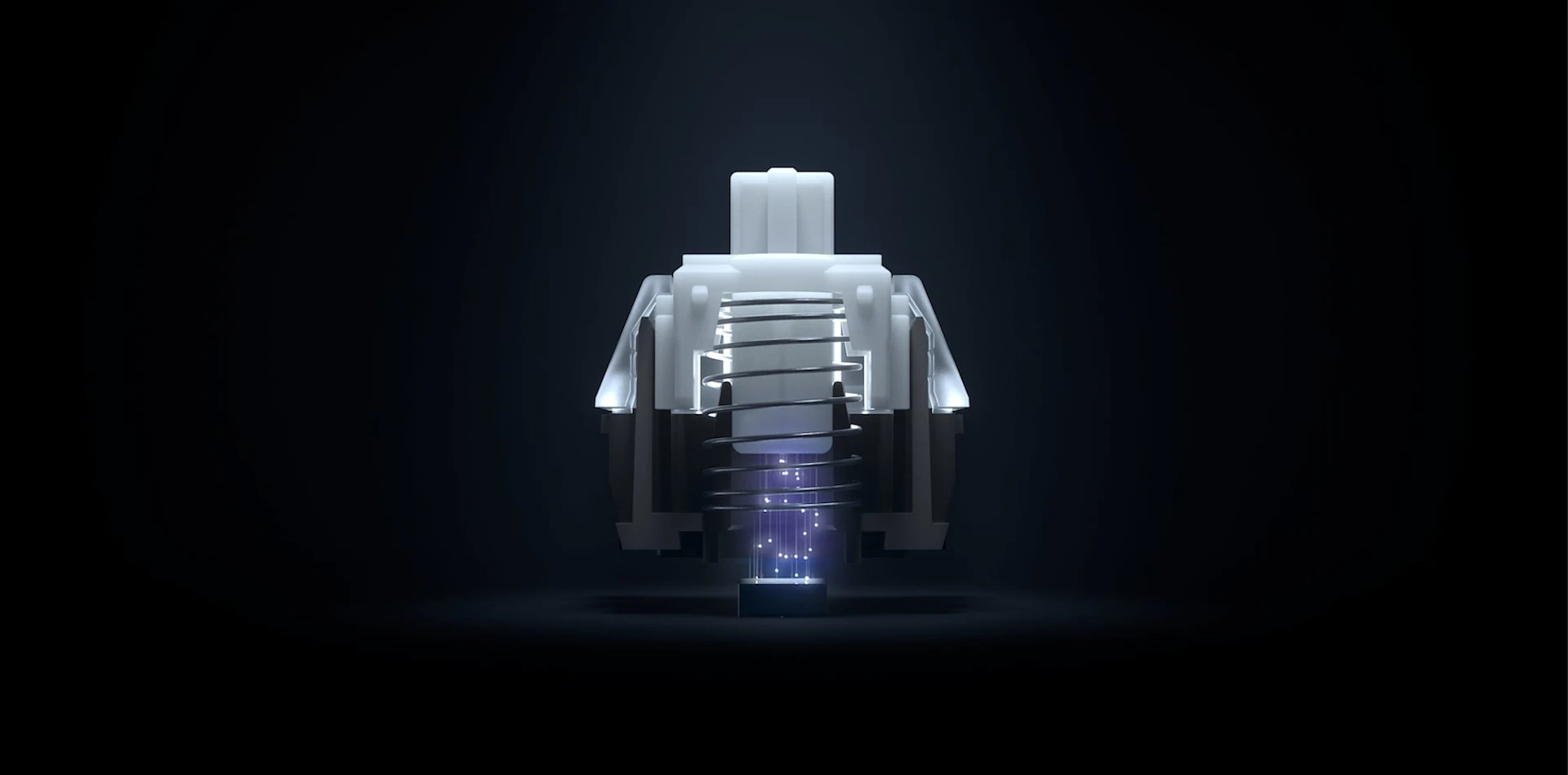
What are Adjustable Mechanical Switches?
An explanation of the Apex Pro's groundbreaking OmniPoint adjustable mechanical switches.
What are adjustable mechanical switches, and why would you want them? Let's explore the biggest game changer in mechanical switches since their invention 35 years ago.
The switch wars
In the world of gaming keyboards, there has been a race to have the fastest switch in the world.
The reasoning was simple: if you can hit a key even a split second before the enemy, it could mean the difference between a win and a loss.

Becoming the "fastest" switch has been achieved in two basic ways: by shortening the distance that a key needs to travel until it electronically registers a keypress (AKA actuation), and by speeding up the response time once a keypress is made.
Step by step, actuation distance has been shrinking over the years, allowing switches to actuate faster and faster one millimeter at a time.
Unfortunately, there's been a salty price for this kind of speed.
The accidental side effect
Not having to travel very far makes keys insanely sensitive. This is a great benefit for pro players who need an advantage on the tournament stage.
But not everyone finds it easy to type on an ultra-fast, ultra-sensititive keyboard at all times.
On most mechanical gaming keyboards, even lightly brushing a nearby key can result in an unintended keypress, which is annoying when you’re trying to type, and even worse in the middle of an important match.
So no, all those typos aren't caused by just your sausage fingers: it’s your keyboard.
It takes time and practice to hone in on pro-level accuracy when your keyboard is so hyper-sensitive that even bumping a key will cause it to register. It's an aquired skill, and it's definitely not needed at all times.
While many seasoned pros prefer super sensitive high actuation keyboards for speed, typing enthusiasts and many other gamers prefer lower actuation keyboards for increased accuracy, ensuring that each keypress is more deliberate.


