Connectivity Options: USB vs. XLR
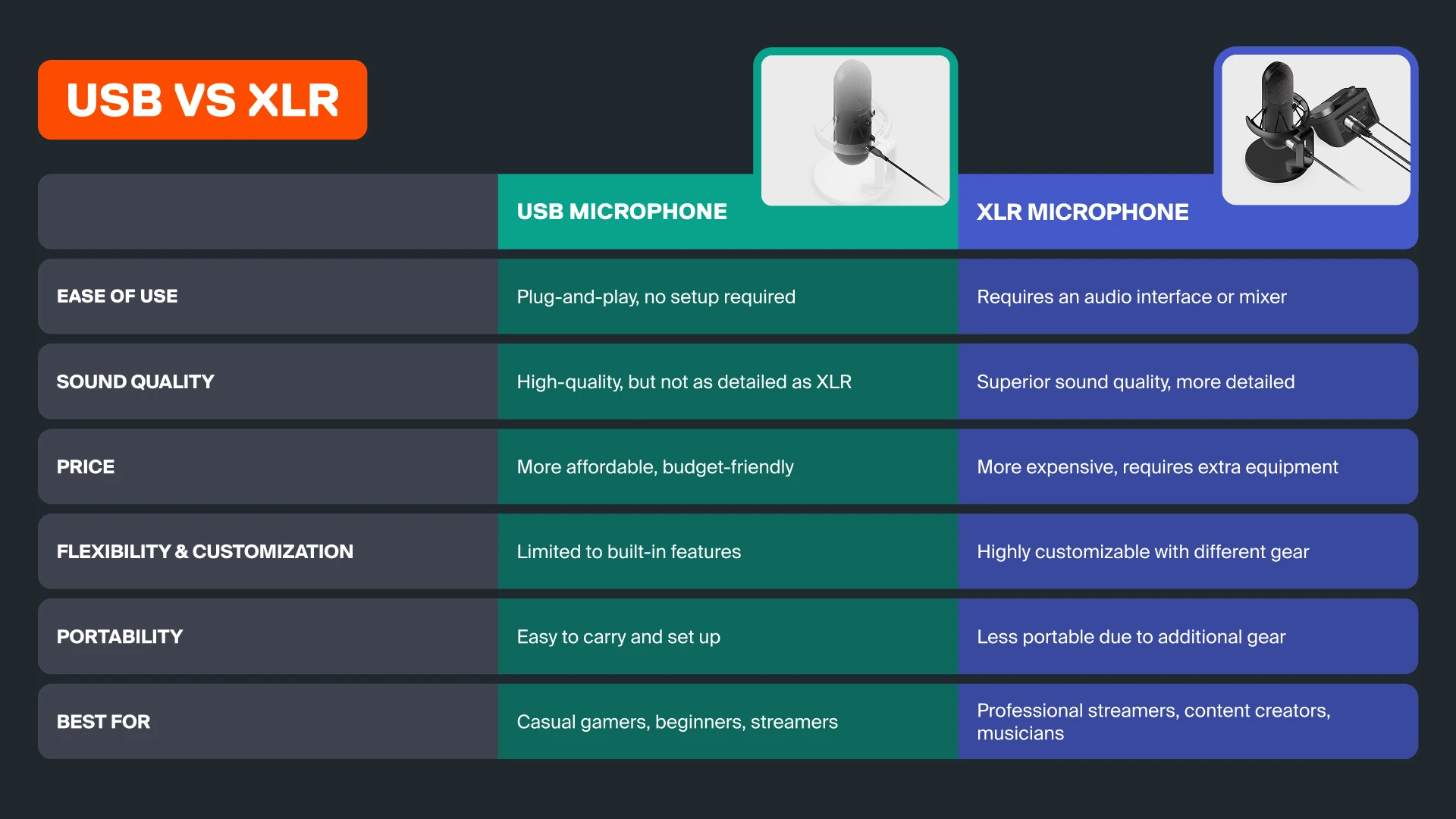
When it comes to connecting your microphone, you have a few options. USB and XLR are the two primary connection options, but the one you pick depends mostly on your setup and personal preferences.
USB Microphones
USB microphones are a popular choice due to their plug-and-play capabilities. They’re simple, convenient, and easy to use. They also don’t require additional equipment like a separate audio interface or mixer because they’re outfitted with them already.
Whether you’re a casual gamer, a streamer, or you travel a lot and want to game on the go, USB microphones are probably the right option for you due to their portability, ease of setup, user-friendliness, and less investment.
This is exactly what we offer with Alias, which is incredibly easy-to-use; simply plug it in via USB-C for incredible mic quality.
XLR Microphones
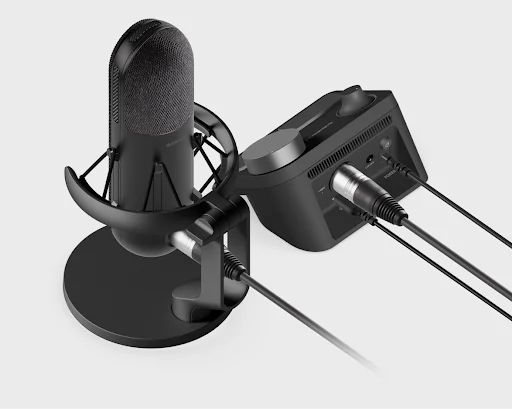
XLR gaming microphones are another great option, but for different reasons. XLR mics are typically used by professional content creators, musicians, and streamers who want the highest possible sound quality and greater flexibility. They offer superior audio quality performance but can require audio mixers or interfaces to function properly.
XLR mics typically have higher sound fidelity and better signal quality than their USB counterparts. They also typically have better dynamic range, lower self-noise, and more detailed audio capture. Additionally, if you plan on investing in additional audio equipment, this is going to be the best option for scalability. While these mics may come with higher costs, ultimately, you’ll end up with overall better audio quality.
This is easily solved with Alias Pro, which is an XLR mic with an included XLR Stream Mixer. Featuring customizable controls an RGB, it's a great companion on the desk of any casual, semi-serious, or professional streamer and content creator.